What’s New in Adaptive Technology

In this episode, we’re joined by Adaptive Technology Trainer, Isaac Grelk, and Technology Specialist, Mickie Saltzman. They share their personal stories with vision loss and reflect on their experiences supporting the blind and visually impaired community.

Together, they explore recent advancements in accessibility and adaptive technology, highlighting tools that are empowering individuals to live more independently.

Meet the Enrichment Team: Isaac Grelk

Isaac Grelk understands firsthand the challenges of adjusting to life with vision loss, but he also knows how to thrive despite it. Now, as an Adaptive Technology Trainer at Outlook Enrichment, he’s using his lived experience to support others on their journey toward independence, confidence, and connection. Read on to learn how his journey led him to empowering others.


Isaac’s Early Signs and Diagnosis of Stargardt Disease

Isaac’s vision loss first became apparent to his parents when he struggled to connect with the ball during little league baseball. After two years of tests, he was diagnosed with Stargardt disease, a genetic eye condition that leads to a fatty buildup in the macula, affecting central vision. He explained that both of his parents are gene carriers, and one of his siblings has also been affected. While his vision has remained stable over the years, he acknowledges that it could change with age. Isaac describes his vision as similar to looking around a fist held in front of his nose, explaining that he has a blind spot in the center of his field of vision.

After moving to Omaha in 2016, he was first connected with Outlook Enrichment when his mother discovered the organization online. It provided him with a great opportunity to make new friends who are also blind or visually impaired during high school and to stay active in recreational programs.

Isaac later attended the University of Nebraska at Omaha (UNO), where he earned a bachelor’s degree in kinesiology. When asked why he chose that path, he said, “I always liked helping people achieve their goals, whether fitness-related or something personal.”


Embracing Blindness and Finding Personal Success

One of Isaac’s greatest ongoing challenges has been transportation. For a long time, it was difficult for him to get around independently, as he had to rely on his wife or services like Uber or Lyft, which could be costly. This changed when he moved to La Vista and discovered the La Vista-Ralston Special Services Shuttle. He was grateful for a simple application process, having only to fill out a form and hand it to the driver on his first ride. This smaller, more localized service has provided greater flexibility, and the drivers have even learned his routine, so he no longer needs to call ahead to schedule each ride.

In terms of personal growth, Isaac has had several milestones worth celebrating:


Empowering the Blind Community Through Community Programs

Towards the end of college, Isaac’s involvement with Outlook Enrichment deepened when he took on an internship with Outlook Enrichment as part of his practicum at UNO. He landed the internship after an associate overheard him on a tour saying, “This would be a neat place to work.” That small moment turned into a big opportunity.

During his internship, he taught CrossFit classes to clients through our health and wellness program. He also trained his peers to adapt workouts and to follow proper etiquette when interacting with individuals who are blind or visually impaired.

After completing his internship and graduating from college, Isaac transitioned to the manufacturing floor at Outlook Nebraska, gaining experience on the employment-focused side of our organization. When an Adaptive Technology Trainer position opened at Enrichment, he knew it would be a perfect fit.

Today, Isaac works directly with clients, teaching them to navigate technology using accessibility features such as screen readers, voice commands, typing tools, AI, and more. When asked what he enjoys most about the role, Isaac didn’t hesitate:

“The moment clients realize they can independently use their phone again, that ‘ah-ha’ moment is the best.” He always reminds them, “You can do a lot more than you think you can.”


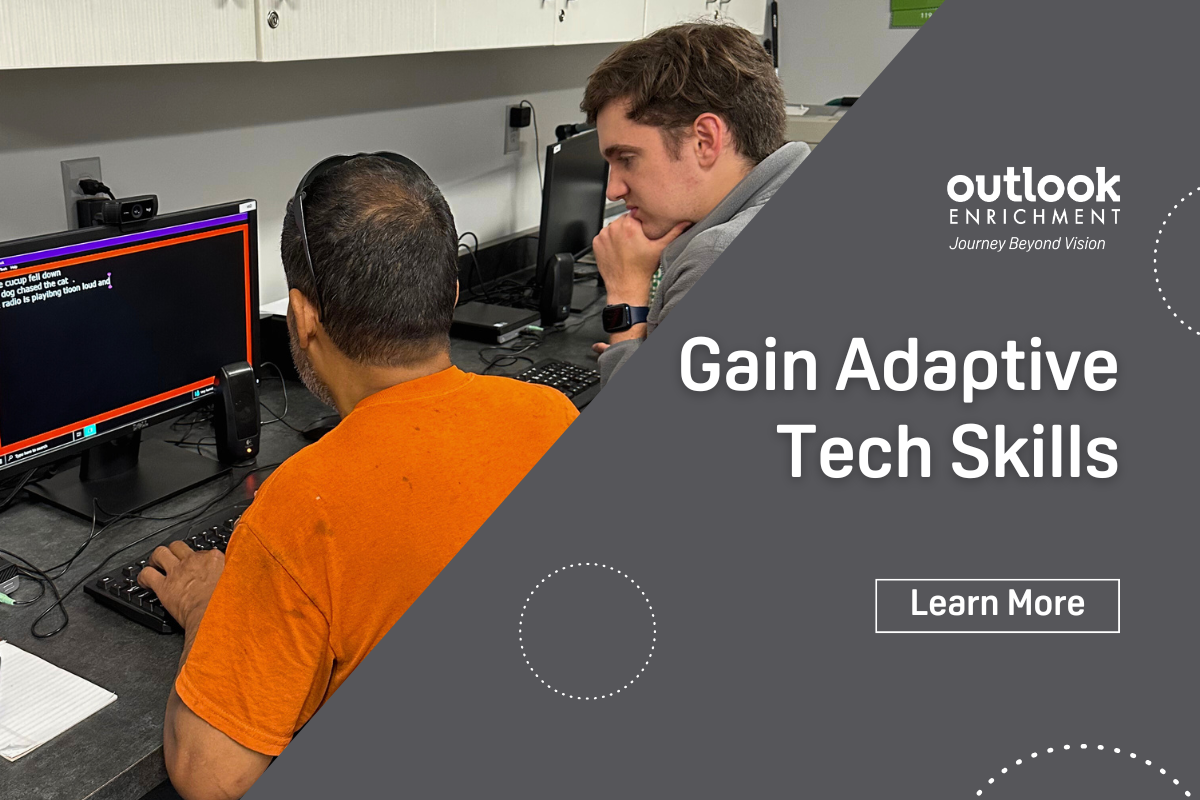
Outlook trainer, Isaac, works with a male client on computer typing skills.


Isaac’s story is a powerful reminder that vision loss doesn’t define a person; it simply reshapes how they experience the world. From learning to adapt at a young age to becoming a trusted tech trainer at Outlook Enrichment, he has embraced his identity and now helps others do the same on their journeys towards independence.

Interested in training with Isaac? Let’s get in touch!

A Veteran’s New Chapter: Josh Scarborough’s Story

With Veterans Day taking place this month, we’re spotlighting one of our own, Josh Scarborough, a veteran whose journey has taken him across the globe and ultimately led him to embrace a new chapter at Outlook Nebraska.

From active deployment to navigating the challenges of vision loss, Josh’s story is a powerful reminder that with the proper resources, it’s possible to rediscover purpose, rebuild confidence, and let your inner light shine.


Josh’s Path to Service in the U.S. Army

Josh was born in Upper Michigan and raised in Florida, growing up in a military family that was often on the move. He decided to enlist in the Army at 17, motivated by a desire to improve his life by changing his environment and building a more positive future. One of the benefits of serving was the opportunity to take college courses, which he noted is strongly encouraged within the military. During his service, he earned a degree in Military History and a minor in Military Science.

After choosing to enlist in the Army, he completed academic tests and physical exams to determine his Military Occupational Specialty (MOS), aiming for a role he described as “cool”. Initially, he was set to be a gunner/crewman for the BMG-71 TOW, but when that position was phased out, he shifted to Direct Fire Infantry, where he spent most of his military career. Josh served in multiple units, including mechanized, air assault, light infantry, and combined arms.  


The Highs and Hardships of Infantry Life

Josh is not one to sit still. “I didn’t like garrison life,” he admitted, referring to his time spent on base. Instead, he preferred deployment and was often in the U.S. for only 2 to 3 months at a time. He shared that while you can have a wish list of preferred deployment locations, it ultimately depends on what your branch manager can arrange. His favorite deployments were to South Korea, where he spent four to five years stationed around the country from the DMZ (Demilitarized Zone) to the city’s capital, Seoul. Over the years, his service took him to other places as well, including Iraq, Afghanistan, Africa, and the Philippines, and even across the ocean by ship while guarding equipment.

However, life in the military comes with risks and tribulations. During his first enlistment, Josh began experiencing vision issues, especially at night, even while using night-vision equipment. He realized that a series of multiple injuries, including concussions and traumatic brain injuries (TBIs), sustained from improvised explosive devices (IEDs), were damaging his vision. One incident he recalled occurred during the surge in Iraq. He was riding in a Humvee when it flipped from impact, pinning him in a canal. This incident resulted in a concussion and a neck injury, requiring him to be medically evacuated to Germany. After 11 years of service, Josh separated from the Army. Having to start a new chapter in life, Josh chose to move near his sister, his closest relative, who was stationed at Offutt Air Force Base. 


Finding a New Home at Outlook Nebraska

Within just a few months of moving, Josh learned about Outlook Nebraska and was quickly hired on the manufacturing floor.  Today, Josh works as an Operator at Outlook Nebraska and continues to enjoy the hands-on nature of his job. One of his favorite activities during his shift is listening to audiobooks. “I loved reading as a kid; it keeps my mind and creativity going,” he shared.

Transitioning to life with vision loss wasn’t easy. He described the most challenging part as figuring out where to seek help and learning how to adapt to new technology. Through Outlook Enrichment, he learned to use a cane and accessibility features such as Magnifier on his phone.

He described his current vision as limited to shadows with his left eye, fuzzy tunnel vision in his right eye, and difficulty seeing in low-light conditions. Despite these challenges, Josh is grateful for Outlook Nebraska and the support he’s received. “I’ve met some really good, patient people. I had some adapting and growing up to do, and I don’t know where I’d be without Outlook. I love working; it keeps me busy.”
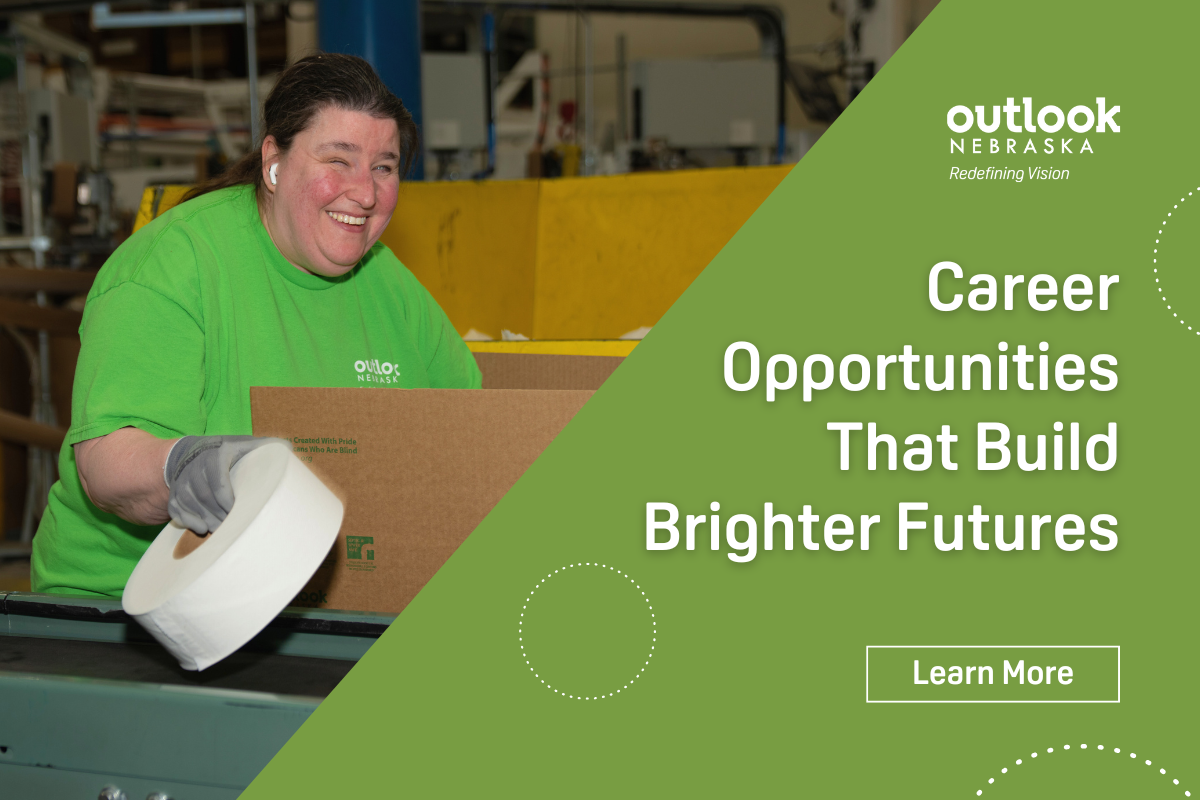
 

Terra is packing toilet paper on the manufacturing floor. "Career Opportunities That Build Brighter Futures - Learn More."


This Veterans Day, we honor Josh and all who have served. When asked what advice he would give to fellow veterans facing similar challenges, Josh said, “There are organizations that can help you. Your biggest obstacle is yourself.” Regarding his experience working at Outlook Nebraska, he added: “Outlook Nebraska lets you succeed and grow as much as you want to and are capable of.”

If you or a loved one is a blind or visually impaired veteran seeking support, whether through our community programs or employment, we’re here to help. Please complete our Employment Interest Form or contact Outlook Enrichment to get in touch.

Let’s continue to uplift and empower those who have sacrificed so much in service to our country.

Talking Sports, Internships, and Big Dreams with Emily Keating

In this episode, we are joined by Emily Keating, a client and passionate sports enthusiast who aspires to become a sports writer. She shares her experience as an intern at Hurrdat Sports and talks about her personal and professional goals for the future.

Emily also reflects on the challenges she’s faced and the resources that have supported her journey, whether in college, at work, or through Outlook Enrichment.

Why Diabetes Puts Your Vision at Risk and How to Protect It

November is National Diabetes Month, a time to raise awareness about diabetes and promote preventive care for related health issues, including vision loss. According to the NIDDK, diabetes affects approximately 38 million Americans, including both adults and youth. It’s also one of the leading causes of death in the United States.

Beyond the statistics, diabetes brings a range of complications that are often overlooked, including its serious impact on eye health. In this blog, we’ll explore what diabetes is, the eye conditions most linked to it, and how you can manage your health to protect your vision.


What is Diabetes?

Diabetes is a disease that occurs when your blood glucose levels are too high. Diabetes occurs when the pancreas fails to produce enough insulin or use it effectively, resulting in glucose remaining in the blood instead of being utilized for energy. If left unmanaged, diabetes can lead to serious health complications over time, including organ and tissue failure.

Here’s a quick overview of the types of diabetes:


The Link Between Diabetes and Vision Loss

In addition to its overall health impacts, diabetes significantly increases the risk of developing severe eye conditions that can lead to vision loss. One of the most common complications of diabetes is diabetic retinopathy (DR), which can lead to vision impairment or even blindness. A 2021 study published in JAMA Ophthalmology estimated that 9.6 million people in the U.S. have diabetic retinopathy.

DR occurs when high blood glucose levels damage the retinal blood vessels. This condition can affect anyone with type 1, type 2, or gestational diabetes, and often impacts both eyes. Common symptoms include blurred vision, spots or floaters, darkened vision, and vision loss.

Other diabetes-related eye conditions include:


Managing Your Diabetes and Protecting Your Eye Health

The good news is that effectively managing your diabetes through regular blood glucose monitoring, medication, and a healthy lifestyle can significantly reduce the risk of developing diabetic retinopathy and other related conditions.

If you’ve been diagnosed with diabetes, your healthcare provider may recommend annual comprehensive eye exams. These exams are crucial for detecting early signs of diabetic eye disease, monitoring its progression, and providing you with peace of mind about your eye health. It’s equally important to learn about the type of diabetes you have, as this knowledge will help you care for yourself and advocate for your needs more effectively.

Maintaining a healthy lifestyle is essential for managing diabetes. Depending on your individual circumstances, your healthcare provider may suggest meeting with a nutritionist. Outlook Enrichment is here to support your health and wellness journey, offering adaptive recreation classes, healthy cooking sessions, and a variety of peer support groups.

You can use personal assistants like Alexa to help manage your care, along with tools like ScripTalk, Spoken RX, braille, and large print materials to identify your medications safely. Additionally, there are accessible monitoring devices and insulin-measuring tools available, many of which can connect to your smartphone. Ultimately, it’s essential to create a medication management routine that works for you.

Managing diabetes involves more than just regulating blood glucose; it’s also about safeguarding your entire body, including your eyes.


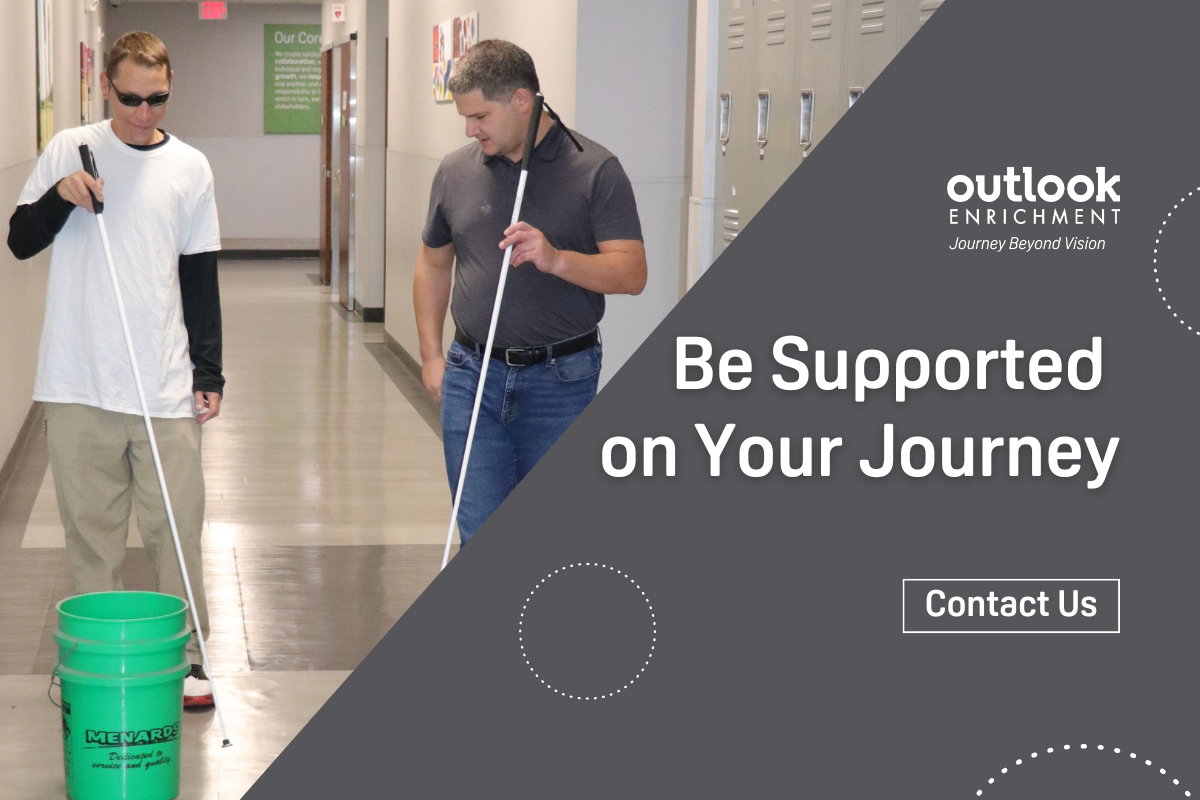
A male client practicing cane travel with a male trainer. "Be Supported on Your Journey - Contact Us."


Living with diabetes is a journey, one that requires care, education, and support. Diabetic eye disease can be overwhelming, but early detection, informed lifestyle choices, and the use of community resources can make a significant difference.

This National Diabetes Month, let’s not only raise awareness but also take action. Prioritize your health by scheduling an eye exam, asking your doctor questions, and seeking the support you need. If diabetes has affected your vision, remember that you’re not alone. Schedule a meeting with Outlook Enrichment today.


References:

Tax-Efficient Giving Strategies Every Donor Should Know

Guest Author:

Seth Cave, CFP®, CEPA® at Ellerbrock-Norris


Did you know that the way you give to charity can be just as important as the amount you give? Many generous donors write a check each year to their favorite nonprofit, but in doing so, they may miss out on tax benefits that could allow them to give even more. With a little planning, charitable giving can be structured in ways that reduce your tax bill while increasing your impact.


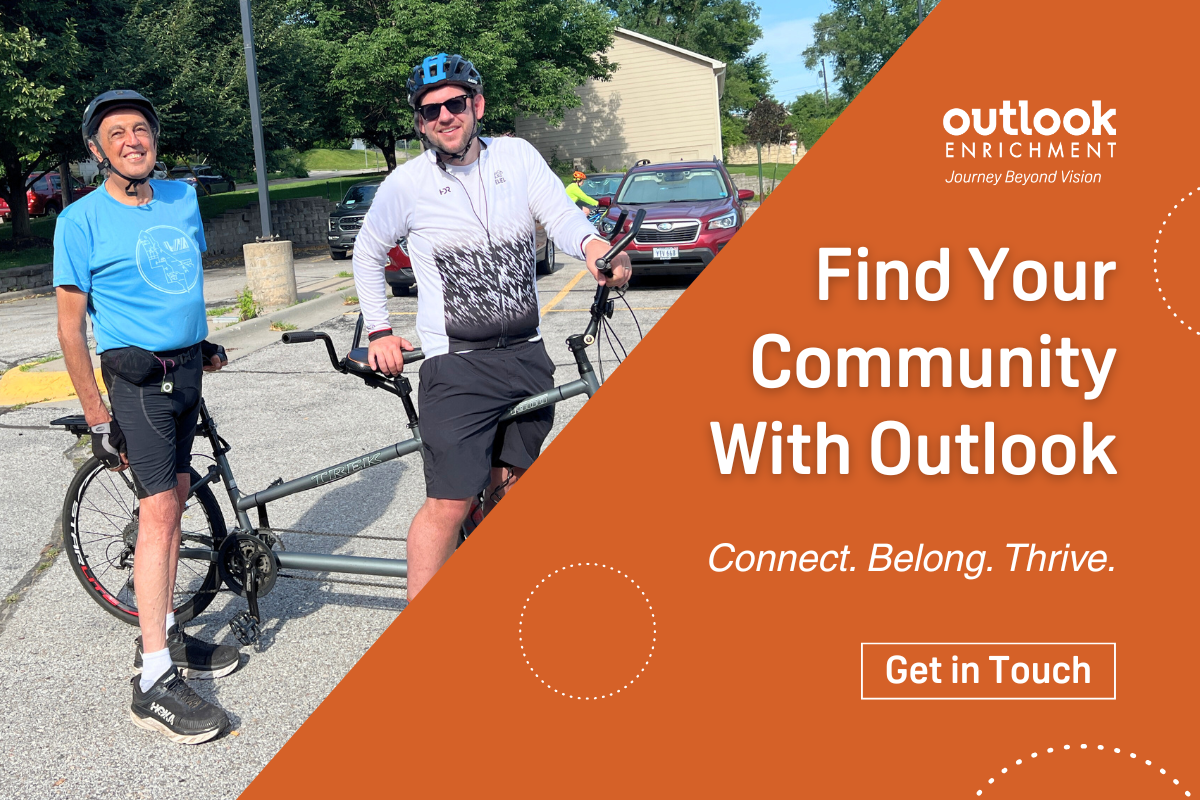
Two adult men smiling on a tandem bike. "Find Your Community With Outlook - Connect. Belong. Thrive. Get in Touch."


Qualified Charitable Distributions (QCDs)

Many retirees save diligently in retirement accounts, such as 401(k)s or IRAs, during their working years. While this is a great strategy to reduce taxes during your working years, the downside is that withdrawals in retirement are taxable as income, and once Required Minimum Distributions (RMDs) begin, those taxes can add up quickly. I affectionately refer to this as a “Tax Tsunami” that can trigger a ripple effect on other income sources, Social Security, and even Medicare premiums.

One solution to this “Tax Tsunami” is to use a Qualified Charitable Distribution (QCD). Instead of withdrawing from your IRA and then writing a check to charity, you can direct funds straight from your IRA to a nonprofit. The gift goes tax-free to the charity, reduces your IRA balance, and counts toward your RMD. For 2025, individuals can give up to $108,000 per year through QCDs. It’s one of the most effective ways to reduce taxes while supporting causes you care about.


Gifting Appreciated Securities

Cash isn’t always the most efficient way to give. Many donors own stocks, Exchange-Traded Funds (ETFs), or mutual funds that have appreciated significantly in value. Selling those investments may result in a large capital gains tax bill.

Here’s an alternative approach. Imagine Susan bought stock years ago for $2,000, and today it’s worth $10,000. If she sells it, she will owe capital gains taxes on the $8,000 gain, typically taxed at a rate of 15-20%. Instead, if she transfers the stock directly to a nonprofit, the charity receives the full $10,000, and Susan avoids paying capital gains tax entirely. This strategy enables donors to fulfill their giving goals while avoiding a tax bill —a win-win for both sides.


Donor-Advised Funds (DAFs)

For donors looking for flexibility, a donor-advised fund can be a powerful tool. A DAF is essentially a charitable investment account. Here’s how it works: a donor first makes a contribution (cash or appreciated securities), then receives an immediate tax deduction, and can grant money to a nonprofit at any time.

This approach works exceptionally well in years when income is unusually high, for example, after a business sale, a large bonus, or a real estate transaction. By “bunching” several years’ worth of giving into one contribution, donors can maximize their tax deduction in that high-income year while still spreading gifts to nonprofits over time.


Key Deduction Limits


Final Thoughts 

At its core, charitable giving is about making a meaningful impact. However, with some planning, you can often increase that impact while lowering your tax bill. Whether it’s using QCDs, gifting appreciated investments, or creating a donor-advised fund, the right strategy can amplify your generosity.

If you’d like to explore which approach best fits your situation, consider starting by clarifying your giving goals:

Answering these questions can help guide your plan and ensure that both you and the causes you care about benefit as much as possible.