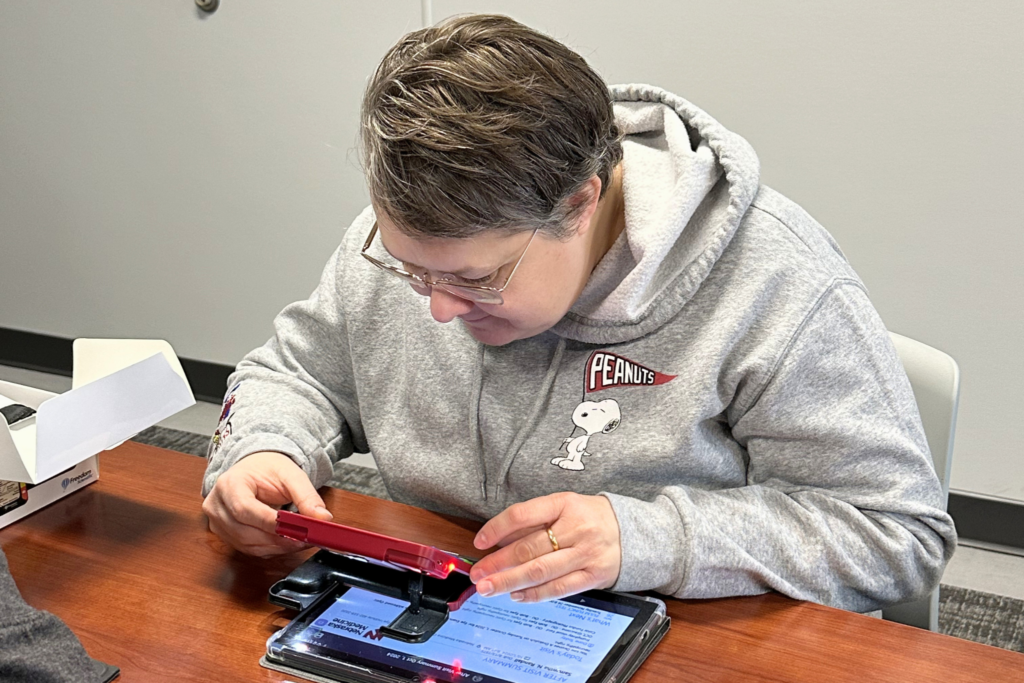
Adaptive technology continues to advance, with popular software like ZoomText and devices like CCTVs. Yet, handheld magnifiers haven’t kept pace. Though often pictured as classic Sherlock Holmes glasses, today’s diverse magnifiers suit many lifestyles. With so many options, it’s easy to feel overwhelmed. This guide focuses on what matters and helps you find the magnifier that fits your needs.
Understanding the Basics of Magnification
Magnification is the process of making an object appear larger than it is. Power refers to the amount of magnification and is usually represented by an ‘X.’ For instance, 3X means the object appears three times its original size. Even though this may sound straightforward, selecting the right magnification level is not just about choosing the highest number.
Lens curvature is another important factor. A greater curvature results in a shorter focal length (the distance from the lens’s center to the point where the object comes into focus), yielding a higher-power lens. Inversely, a lens several inches wide generally has less curvature, providing a larger viewing area but relatively low power. The main takeaway: lens size and magnification level are not directly related. Even broad-coverage magnifiers may only offer limited magnification (1X to 3X), so choose your tool based on clarity and your reading needs.
While an option may initially seem convenient, it may no longer meet your needs as your vision changes. Many individuals begin with a page magnifier, believing it will eliminate the need to move the device. However, as vision evolves, such lower-powered options may no longer provide enough clarity. You may also find that features such as color and lighting contrast become increasingly valuable.
Common Types of Magnifiers for Low Vision
Now that you have a better understanding of how magnification works, the next step is exploring the different types of magnifiers available. Numerous low vision aids are designed for specific tasks and preferences, and selecting the right one depends on your intended use. Magnifiers typically range from 2X to 10X, are offered in a variety of formats, and are generally handheld or mounted on a stand.
Reading Glasses
Often, the first solution people try is over-the-counter reading glasses (“cheaters”), which are relatively affordable and easy to find. These lenses are in the lower-power range, with magnifications from 1x to 3x. Cheaters help bring small text into focus by magnifying it, making it appear larger.
The catch is that cheaters magnify everything you see through them, not just the text. They’re fine for close-up tasks, but distant objects can look distorted, and using them too much might cause headaches or eye strain. If you’re reaching for cheaters all the time, it’s a good idea to check in with your eye care professional. Bifocal glasses have the advantage of only changing part of your field of view. If you view something through the base of the lens, the text will appear larger or clearer, but if you look through the top of your glasses, objects appear as they would normally.
Handheld, Electronic, and Stand Magnifiers
For more flexibility, handheld magnifiers are great for quick tasks like reading a menu, price tag, or directions on packaging. They are portable and versatile, and often include built-in lighting. If you require additional support, electronic magnifiers use a camera and a screen to magnify, letting you adjust settings like contrast and background color. We often cover these features in adaptive technology training sessions.
When longer periods of reading are needed, stand magnifiers can provide more comfort and stability. They rest directly on the page, keeping the lens at the optimal distance for clearer viewing. Some models are also designed for reading and writing tasks, such as writing checks, signing documents, or taking notes. Often, stand magnifiers include a swing arm, allowing hands-free use and making them perfect for hobbies or longer tasks where comfort and positioning matter.
Monoculars and Binoculars
For distance viewing, monoculars and binoculars function as small handheld telescopes. Both devices help users see objects at distances of 15–30 feet. They allow users to see items such as street signs, menus, and performers more easily. Because they have a smaller field of view, they often require practice and scanning techniques to use effectively.
Key Factors to Consider When Choosing a Magnifier
With so many options, start by understanding your specific needs. The right magnifier is about how it fits into your daily life, not just the device itself.
To help guide your decision, start by asking yourself:
- How much magnification do you need?
- What kind of tasks will you be doing with the magnifier?
- What environment will you use the device in?
- Do you need additional lighting with the magnifier?
- Do you have other physical limitations, such as arthritis, carpal tunnel, or tremors?
Your answers, combined with guidance from a low vision specialist, can help you find the right mix of tools for your needs. In many cases, using a variety of devices for different tasks is the most effective approach, and insurance may help cover the cost of an evaluation.
Choosing a magnifier can feel overwhelming, but you don’t have to do it alone. Whether you’re just starting out or seeking better tools, our team can help you find what works and ensure you know how to use it. Contact us today to connect with a trainer and take the next step toward greater independence.